Which Calls Need Human Staff? A Practical Guide
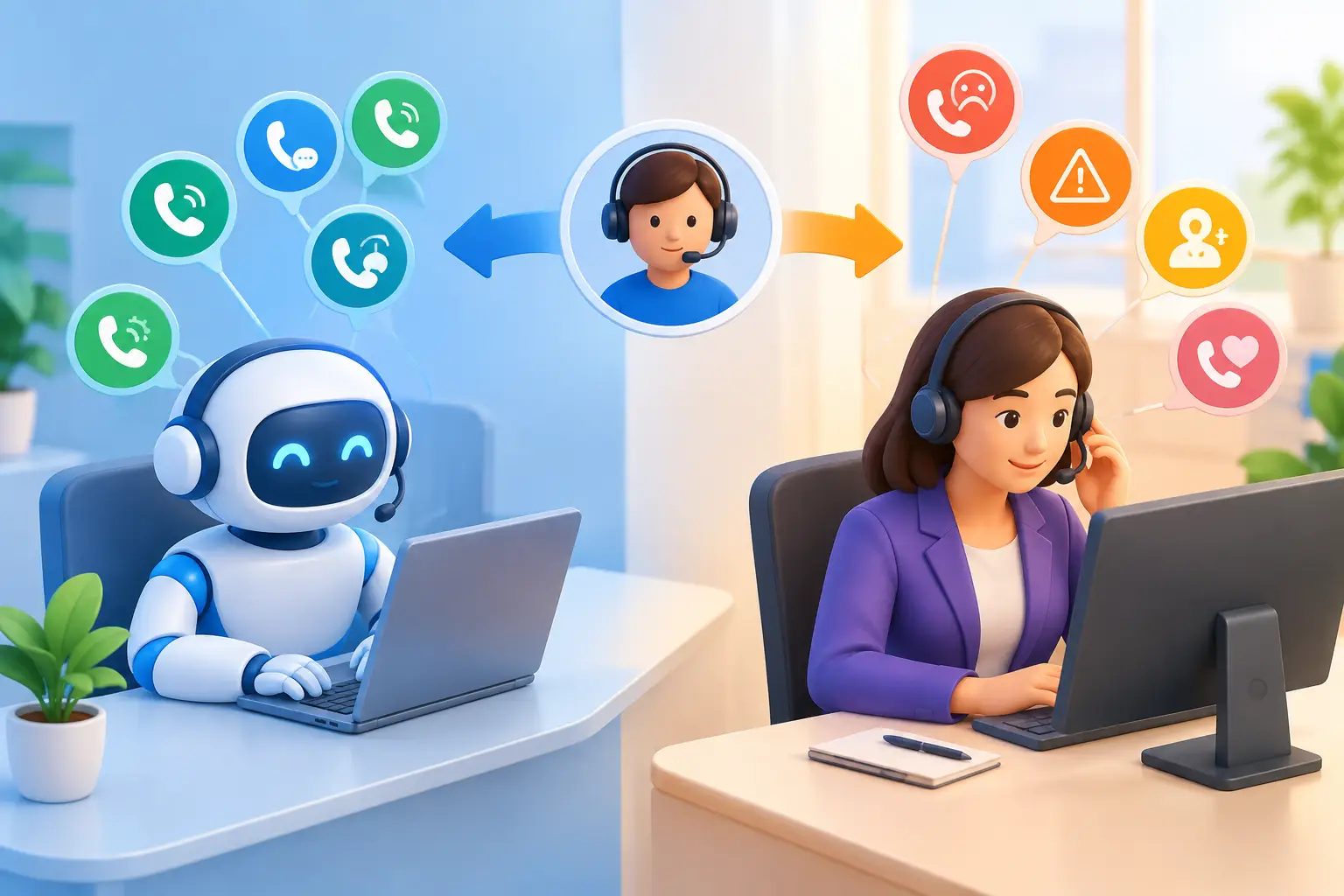
A ringing phone is not always a job for your team. But the question of which calls need human staff matters more than most businesses realise. Get it wrong and you either burn staff time on repetitive admin or hand a high-value customer conversation to a system that cannot give them the confidence they need.
The practical answer is not “AI for everything” or “humans for everything”. It is a clear hand-off model: let AI handle fast, repeatable, rules-based calls, then route customers to people when judgement, reassurance, negotiation or a real relationship will move the sale forward.
For Australian service businesses, that split can mean the difference between a packed voicemail inbox and a booked diary.
Which calls need human staff most?
Human staff should take the calls where the outcome depends on context, discretion or trust. These are conversations where a customer needs more than an answer. They need someone to assess the situation, take ownership or help them make a decision.
Complex or unusual customer problems
A standard booking request is straightforward. “Can you fit me in for a hot water service next week?” has a clear path: capture details, offer available times and confirm the booking.
But a caller saying their ceiling is leaking, their solar system has stopped after a storm, or they have been quoted three different prices by other providers needs a more considered response. There may be safety risks, technical variables, insurance questions or a need to calm an understandably stressed customer.
AI can collect the first details, identify urgency and alert the right person. Your staff should handle the diagnosis, advice and commitment where the facts are unclear or the consequences are significant.
High-value sales and negotiation
When a prospect is comparing proposals, challenging a price or ready to discuss a major project, a capable salesperson should be involved. This is especially true for solar installations, mortgage products, commercial services, real estate, major dental treatment or larger home improvement work.
The call may involve scope changes, finance options, competing quotes, timing pressures or decision-makers who are not yet on the phone. A good salesperson can hear hesitation, adjust the conversation and explain the value behind the price.
AI should not be left to negotiate commercial exceptions. It can qualify the lead, gather site details, chase missing photos and book the consultation. Then your team enters the conversation prepared, rather than starting from scratch.
Complaints, cancellations and service recovery
A complaint is rarely just a complaint. It is a moment where a customer decides whether to stay, leave or tell others about the experience.
If a client is upset about a missed appointment, a delayed repair or an unexpected invoice, they need to feel heard. A scripted response can make the situation worse when the person wants accountability. Staff can apologise appropriately, investigate what happened and offer a fair path forward.
AI still has a role here. It can recognise complaint language, capture the issue accurately and route the call with priority. The key is speed. Do not make an unhappy customer explain their story repeatedly before they reach someone who can help.
Sensitive, private or emotionally charged calls
Clinics, dental practices, finance businesses and education providers receive calls that need care. A patient may be anxious about symptoms. A borrower may be facing financial stress. A parent may be calling about a student’s wellbeing.
Even where an AI agent can provide general information and book an appointment, it should escalate when the caller is distressed, discloses sensitive circumstances or needs personalised advice. Privacy requirements and organisational policies should define the boundaries before calls go live.
The standard is simple: if the caller needs empathy, professional judgement or confidential guidance, get a person involved.
Calls AI can handle without slowing the customer down
Most inbound call volume is not complex. It is repetitive work that needs to be answered quickly and completed accurately. Leaving it to busy staff creates delays, and delays cost bookings.
AI voice agents are well suited to calls such as opening hours, service areas, availability checks, appointment bookings, reschedules, reminder calls and basic service questions. They can capture a caller’s name, suburb, job type, preferred time and relevant notes, then write that information into the CRM or booking workflow your team already uses.
For a tradie, this might be a caller asking whether you cover their suburb and whether someone can attend on Thursday. For a dental clinic, it may be a patient needing to move a hygiene appointment. For an automotive business, it could be a service booking with a request for a courtesy car.
These calls matter. They are just not where your best people should spend their whole day.
Lead qualification before the call reaches sales
A sales team should not have to answer every enquiry cold. If the customer has already said what they need, where they are located, their timeframe, budget range and the best time to contact them, the next conversation becomes more productive.
AI can qualify leads against the rules you set. It can identify whether a solar prospect owns the property, whether a home services enquiry is inside your service area, or whether a finance lead meets basic eligibility requirements. It can also identify urgent jobs and send them to the front of the queue.
This does not mean rejecting every lead that falls outside a perfect profile. It means giving staff enough information to decide where their time will have the greatest return.
Follow-up that does not fall through the cracks
Some of the easiest revenue to recover is sitting in leads that were never called back. The quote was sent, the customer got busy, and your team moved on to the next urgent job.
AI can keep those leads warm with timely follow-ups, appointment reminders and simple check-ins. It can ask whether the customer has questions, whether they want to proceed or whether another time suits better. When the reply shows buying intent, uncertainty or an objection, the lead can move straight back to a staff member.
Consistency is the advantage here. A customer who calls after hours should not wait until someone gets through a backlog the next morning.
Build the hand-off around risk, value and variability
The best way to decide which calls need human staff is to assess every call type against three questions.
First, what is the risk of getting it wrong? Booking the wrong time is fixable. Giving incorrect clinical, financial or safety advice is not. High-risk conversations need firm escalation rules.
Second, what is the commercial value? A routine reschedule can be automated. A caller considering a $25,000 installation or a long-term commercial contract deserves rapid access to the right salesperson.
Third, how variable is the conversation? If most callers ask the same questions and follow the same process, automation is a good fit. If every call requires interpretation, exceptions or a tailored recommendation, staff should lead.
The goal is not to create a hard wall between AI and people. It is to make the hand-off feel natural. The customer should not need to repeat their name, story or job details when they are transferred. Their information should arrive with the staff member, along with the reason for escalation and any relevant call notes.
Set escalation rules before you switch anything on
A voice agent performs best when your business defines what “good” looks like. Map your common calls, then agree on the trigger points for a human hand-off.
For example, you might escalate immediately when a caller mentions an emergency, makes a complaint, asks for a manager, discusses a price above a set threshold, requests technical advice, or shows clear intent to buy. You may also route calls differently based on location, existing customer status, lead source or the staff roster.
Give the agent permission to be useful, but do not ask it to pretend it can solve everything. A clear line such as, “I’ll get the right person to help with that and pass on the details you’ve shared,” builds more confidence than a long loop of generic answers.
Review real call outcomes regularly. If customers are frequently asking for a person at the same point, improve the script or change the escalation rule. If staff are receiving routine calls they do not need to handle, move that task back into the automated workflow.
Keep your people where they make the difference
The strongest operating model is not fewer human conversations. It is better-timed human conversations.
When AI answers every first ring, books straightforward jobs, captures lead details and chases routine follow-ups, your team has more capacity for the conversations that protect reputation and grow revenue. They can advise the worried customer, win the complex sale, resolve the service issue and build the relationship that keeps people coming back.
Sparkssurge is designed around that practical split: cover the repetitive work, route the moments that matter and keep every lead moving through the CRM, calendar and sales process.
Start with the calls your team delays, repeats or misses after hours. That is usually where automation earns its place fastest, while your people get back to doing the work only people can do.
See it on your own calls
Book a short demo and we will show you how Sparkssurge answers, qualifies and books on your workflow.
Book a demo