Voice Menus Versus Conversational AI Compared
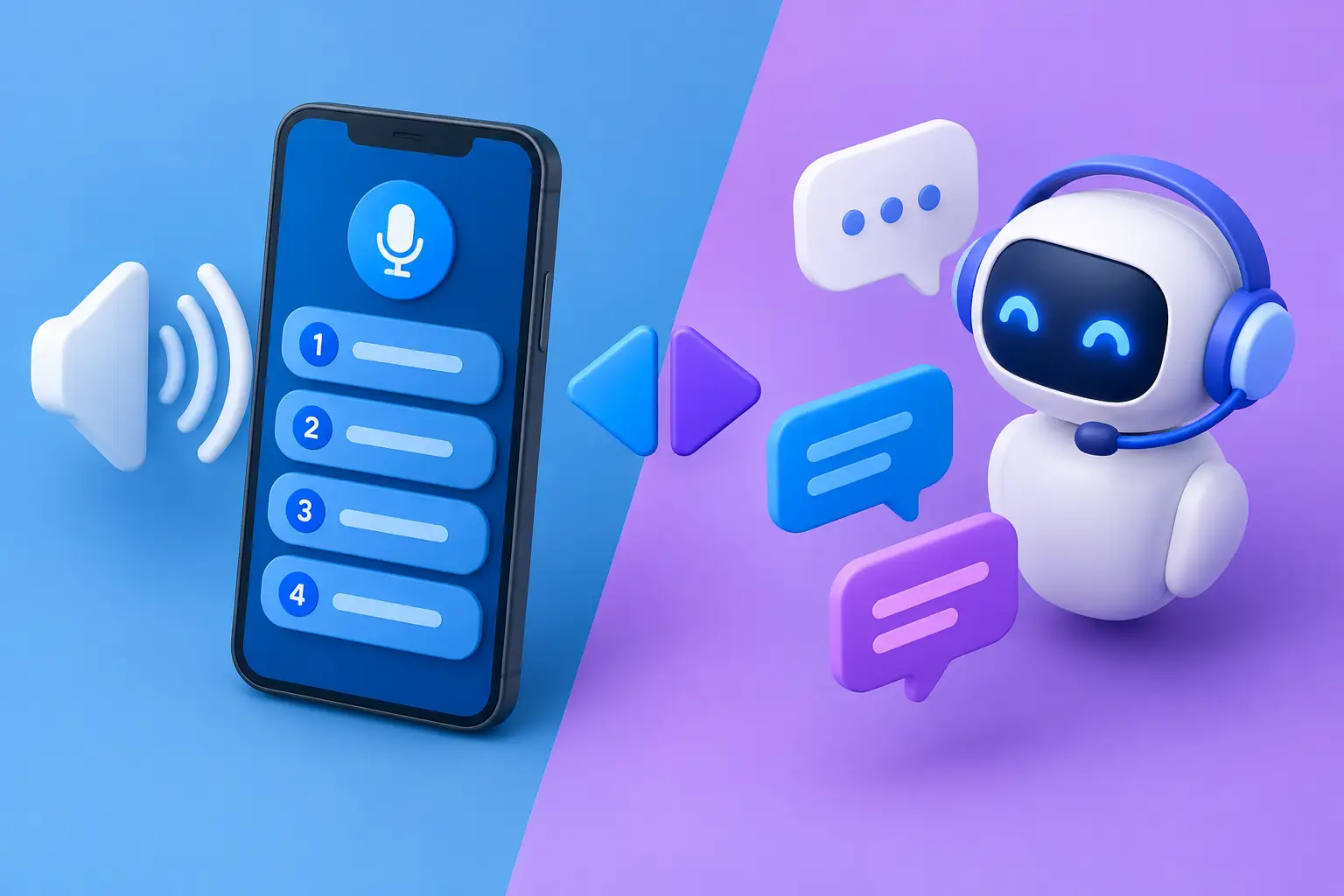
A customer calls your business at 6:15 pm because their hot water system has failed, they want to inspect a property tomorrow, or they are finally ready to book treatment. They do not want to listen to a recording telling them to press one for sales, two for accounts and three for everything else. They want an answer.
That is the practical difference in the voice menus versus conversational AI decision. Both can manage inbound calls outside business hours and reduce pressure on reception. But they create very different customer experiences and deliver very different value once a caller has a real question, an urgent job or a booking request.
For Australian service businesses, the right choice comes down to more than technology. It comes down to how calls become appointments, quotes and revenue.
What a voice menu does well
A voice menu, often called an IVR or phone tree, gives callers a set of fixed options. Press one for new bookings. Press two to change an appointment. Press three to speak with the team. It is familiar, relatively simple to set up and useful when the caller's path is predictable.
For example, a larger clinic may use a menu to direct callers to reception, accounts or a specific department. A property management office may separate maintenance requests from rental enquiries. If the aim is simply to route a high volume of calls to the right queue, a menu can do the job.
Voice menus are also dependable for short, repeatable transactions. A caller who only needs opening hours, an address or a payment reference may get what they need without tying up a staff member.
The limitation is that a menu does not understand intent. It waits for button presses. If a caller says, “I need someone out tonight, my air con has stopped,” the menu cannot recognise urgency, ask for their suburb, check service availability or book the job. It can only send them down the closest pre-set branch.
That creates friction at the exact moment a high-intent lead wants help. Some callers will keep trying. Others will hang up and call the next business on Google.
Voice menus versus conversational AI: the operational difference
Conversational AI is designed to hold a natural, goal-focused phone conversation. Instead of asking callers to navigate numbered options, it can greet them, understand what they need and take the next useful action.
For a plumbing business, that might mean asking where the leak is, whether water has been shut off, the postcode and preferred attendance time. For a dental practice, it could identify whether a patient needs a check-up, has a broken tooth or needs to reschedule, then offer available times from the calendar. For a solar company, it can capture the property type, energy bill range and installation timeframe before booking a qualified consultation.
The key difference is not that conversational AI sounds more human. The commercial difference is that it can move the enquiry forward.
A well-configured AI voice agent can answer common questions, collect the details your team actually needs, create or update a CRM contact, book an appointment, send a confirmation and route complex cases to a person. It works within the phone workflow and systems you already use rather than creating another inbox for staff to check.
That matters when the front desk is flat out, your sales rep is on the road, or calls arrive after hours. The lead is handled while interest is still high, not added to a voicemail backlog for tomorrow morning.
Where menus lose leads
A phone tree is not automatically bad for customer experience. The issue is using one where a conversation is needed.
Menus commonly lose momentum in three situations. First, callers do not know which option fits their issue. A homeowner may be unsure whether a roof leak is an emergency repair, an insurance matter or a quote request. Second, the caller's need does not fit neatly into the options. Third, the business asks the caller to repeat information once they finally reach a staff member.
Each hand-off adds effort. For a low-value administrative call, that may be acceptable. For a new lead worth thousands of dollars, it is a costly way to start the relationship.
There is also a visibility problem. A menu might show that 40 callers selected “new enquiries”, but it will not necessarily tell you why they called, whether they were qualified, whether they booked or why they dropped off. Conversational AI can capture structured information during the call, giving managers a clearer view of demand, lead quality and recurring questions.
When a voice menu is still the right call
There are cases where a voice menu remains sensible. If your business has a very high call volume, clear internal departments and callers mostly know where they need to go, a short menu can direct traffic efficiently. It can also sit in front of a conversational agent, with options for callers who prefer a specific department.
A menu may suit businesses with strict identity checks or complex account processes that must remain staff-led. It is also a low-cost starting point for teams that only need basic routing and do not yet have the booking, CRM or quoting processes ready to connect.
The test is straightforward: does the caller need navigation, or do they need progress?
If they only need to reach accounts, navigation is enough. If they need an urgent booking, an accurate quote pathway or answers before committing, a conversation is more useful.
What conversational AI needs to work properly
Conversational AI is not a magic recording with a friendlier voice. Its performance depends on the operational rules behind it. The agent needs to know which services you offer, where you operate, what questions qualify a lead, what can be booked and when a call must be escalated.
For example, a home services agent should not promise same-day attendance unless the schedule supports it. A finance or medical business needs clear boundaries around advice and sensitive matters. A real estate agent should identify buyer, seller, tenant and landlord enquiries differently, then send the right detail into the CRM.
The best setup is specific without being rigid. Give the agent approved answers, booking rules, escalation triggers and a clear tone of voice. Then review real calls. Look for where callers hesitate, where information is missing and where staff still need to step in.
This is where many businesses get a better outcome by starting with one high-impact workflow: after-hours call answering, new lead qualification or appointment rescheduling. Once that workflow is producing clean data and reliable bookings, expand into quoting follow-ups, reminders and lead chasing.
Measure outcomes, not novelty
Do not choose conversational AI because it sounds impressive. Choose it if it improves the numbers that matter to your operation.
Track answer rate, abandoned calls, booked appointments, qualified leads, time to first response and the percentage of leads contacted after hours. For sales-led teams, also track how many enquiries become quote-ready and how consistently follow-ups happen after the first call.
Compare those results with the staff time previously spent answering routine calls, returning voicemails and chasing missing details. The goal is not to remove people from the customer journey. It is to remove the dead time between a customer raising their hand and your team being able to help.
For many businesses, a menu is a switchboard. Conversational AI is a front-line team member with defined responsibilities. It can qualify, book, route and keep leads warm, while your people handle judgement, technical advice, sensitive conversations and relationships.
Choose for the call you want to capture
If your calls are mostly simple internal routing requests, a concise voice menu may be all you need. Keep it short, give callers an escape route to a person and avoid making them listen to a long list of choices.
If missed calls are costing jobs, reception is stretched, or sales enquiries need qualification before a rep can act, conversational AI is usually the stronger fit. It gives callers a useful response at the moment they are ready to talk, and it gives your team a cleaner handover when their expertise is genuinely needed.
The best phone experience is not the one with the cleverest script. It is the one that helps a real customer take the next step, while giving your team the information and time to do their best work.
See it on your own calls
Book a short demo and we will show you how Sparkssurge answers, qualifies and books on your workflow.
Book a demo