Sales Follow Up Automation That Closes More Jobs
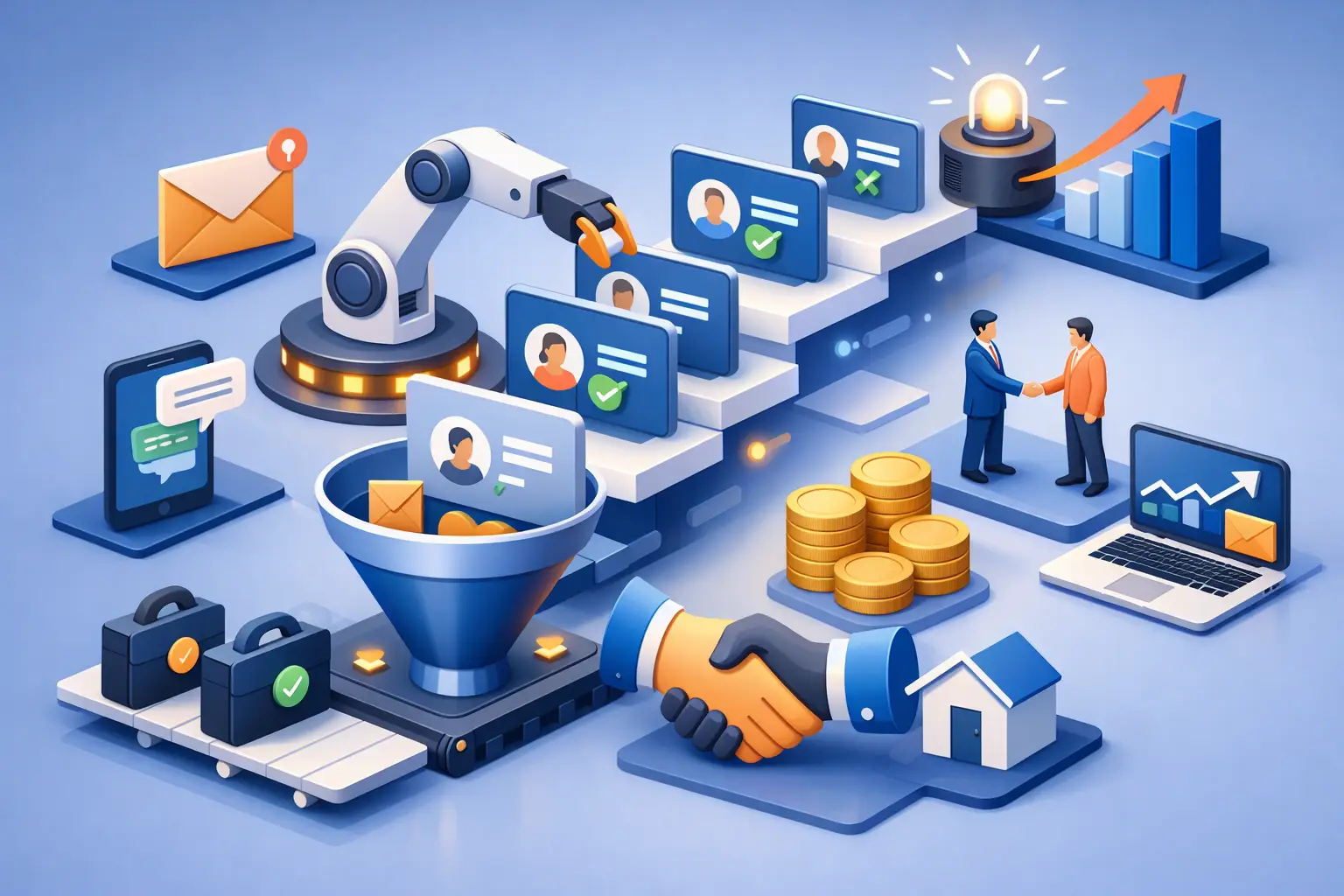
A lead who asks for a quote at 7:15 pm is not necessarily shopping around. They may simply be ready to book and waiting for someone to respond. When the reply lands the next morning, the moment has passed, the job has gone elsewhere, or the customer has forgotten why they enquired.
Sales follow up automation stops that gap from becoming normal. It gives every new enquiry a fast first response, a clear next step and consistent chasing until the lead books, buys or tells you they are no longer interested. For busy Australian service businesses, that is less about flashy tech and more about protecting revenue you have already paid to generate.
Where follow-up falls apart
Most businesses do not lose leads because their team does not care. They lose them because the day gets away. A tradie is on-site, the office is handling a reschedule, the sales rep is preparing quotes, and the CRM has another dozen tasks waiting. Follow-up becomes something people intend to do after lunch, then after the next appointment, then tomorrow.
The problem compounds when the process depends on memory. One team member calls twice, another sends a generic email a week later, and a third assumes the lead is already being handled. Meanwhile, a hot enquiry receives the same treatment as someone who only wanted a rough price.
That creates four expensive gaps:
- missed after-hours and overflow enquiries
- slow contact after a form fill, quote request or incoming call
- incomplete customer details that hold up quoting
- inconsistent chasing once a quote has been sent
Automation cannot make an unsuitable lead suitable. It can make sure the right leads get a timely, relevant response every time, while the wrong-fit enquiries are identified early.
What sales follow up automation should actually do
Good sales follow up automation is not a string of templated emails sent to everyone with a mobile number. It should follow the way your business sells: capture the enquiry, qualify it, move it to the next useful action, then hand it to a person when judgement, advice or relationship-building matters.
For an appointment-led business, the next action may be booking a site visit, consultation or test drive. For solar, trades or home services, it may be gathering property details and photos so the team can prepare a quote. For a clinic, it may be checking availability, booking the right appointment type and sending a reminder.
The system needs to recognise the difference. A new lead asking, “Can someone come out this week?” should be offered a booking path straight away. A customer who has received a quote but has gone quiet needs a useful follow-up that addresses timing, questions or next steps. They do not need five identical messages asking if they are still interested.
Start with speed, then earn the conversation
The first response sets the pace. A prompt phone call, SMS or email confirms that the enquiry was received and gives the customer an easy way forward. This is particularly valuable outside business hours, when people often enquire after work and expect an answer before they start calling competitors.
For many businesses, a voice agent is the practical first layer. It can answer the call, collect the basics, check appointment availability and book the next step while your staff are with customers. If the caller has a complex issue, wants technical advice or is a high-value opportunity, the call can be routed to the right person with the context already captured.
That is the point of automation: remove the repeatable admin so people can spend their time where they add the most value.
Qualify before you fill the diary
Fast booking is useful only when it puts the right work on the calendar. Your follow-up flow should collect the few details that determine whether a lead is worth progressing. Depending on the business, that may include location, job type, budget range, timeframe, property details, vehicle model, insurance status or whether the decision-maker is involved.
Keep this focused. An enquiry form that feels like a tax return will reduce responses. Ask enough to route and prioritise the lead, then capture deeper detail as the conversation progresses.
A qualified lead can be assigned to the appropriate salesperson, territory or service team. A lead outside your service area can receive a polite response rather than sitting untouched in the CRM. This protects the customer experience and keeps your pipeline honest.
Build follow-up around real sales stages
The best workflow is not the one with the most messages. It is the one that gives each lead a relevant next step at the moment they are most likely to take it.
A simple sales process might move from new enquiry to qualified lead, booked appointment, quote requested, quote sent, follow-up due, won or lost. Automation should support the hand-offs between those stages, rather than creating a separate process staff need to manage on the side.
New enquiries need an immediate path
When a lead calls, submits a form or sends a message, the system should log the source, create or update the contact record and trigger a response within minutes. If a booking can be made automatically, offer available times. If it cannot, confirm when the customer will hear back and create a task for the right team member.
Speed matters, but accuracy matters too. A rushed promise that no one can keep is worse than a clear expectation. If your estimator is booked out until Thursday, say so and offer Thursday. The goal is to maintain momentum without creating operational headaches.
Quotes need persistent, useful chasing
Quote follow-up is where many good opportunities go cold. The quote may be ready, but it is sent late. Or it is sent promptly, then no one follows up because the salesperson is already chasing the next batch of leads.
Automated follow-up can create a sensible sequence after a quote is issued: a confirmation that the customer received it, a check-in after a few days, then a later prompt that makes it easy to ask a question or book the work. Each message should reflect the stage, not sound like a mail merge.
For higher-value jobs, automation should also prompt a human call. A homeowner comparing a $20,000 solar proposal may need a conversation about finance, system sizing or timing. The system can ensure that call happens on time, but it should not pretend a generic SMS will close every considered purchase.
Missed contact should trigger a different route
Not every lead responds by SMS. Some prefer a call. Others will reply to email after hours. If a customer does not answer, the workflow should record the attempt and vary the next action rather than hammering the same channel.
This is where CRM integration matters. Your team needs to see the full history: calls, messages, bookings, quote status, notes and next action. Without that visibility, automated activity can become noise and staff can accidentally duplicate it.
Set the rules before you turn it on
Automation exposes weak process quickly. Before building campaigns or deploying an AI sales agent, agree on what happens at each stage. Who owns a new lead? What counts as qualified? How quickly must a quote be prepared? When should a lead be escalated? When does follow-up stop?
The answers will vary. A plumbing business with emergency work needs immediate phone coverage and rapid dispatch. A mortgage broker may run a longer, more consultative follow-up sequence. A dental practice must balance reactivation with patient preferences and appointment capacity.
Start with the highest-value leak, not every possible workflow. For many teams, that is after-hours calls or quotes that sit untouched for more than 48 hours. Fix that first, measure the result, then expand.
Sparkssurge approaches this as a connected sales operation: a Qualifier captures and sorts new opportunities, a Quoter gathers quote-ready information, and a Closer keeps the next action moving. The aim is not to replace the people who build trust and solve complex problems. It is to make sure they receive a prepared customer instead of a cold, incomplete enquiry.
Measure the outcome, not the message volume
A busy automation dashboard can look impressive while sales stay flat. Track the operational measures that reveal whether leads are genuinely moving: speed to first response, contact rate, qualification rate, booking rate, quote turnaround, quote-to-sale conversion and the number of leads with no next action.
Also watch for warning signs. If bookings rise but no-shows increase, your reminders or qualification questions may need work. If reply rates are strong but quotes are not converting, the issue may be pricing, sales conversations or quote clarity rather than follow-up frequency.
The right system should give your team control. They should be able to pause a sequence, take over a conversation, update lead status and see why a customer received a particular message. Automation works best when it is accountable to the people running the business.
Every enquiry deserves a clear next step. Put that step in place while the customer is ready to act, and your team can spend less time chasing forgotten tasks and more time booking the jobs that matter.
See it on your own calls
Book a short demo and we will show you how Sparkssurge answers, qualifies and books on your workflow.
Book a demo