Home Service Dispatch That Books More Jobs
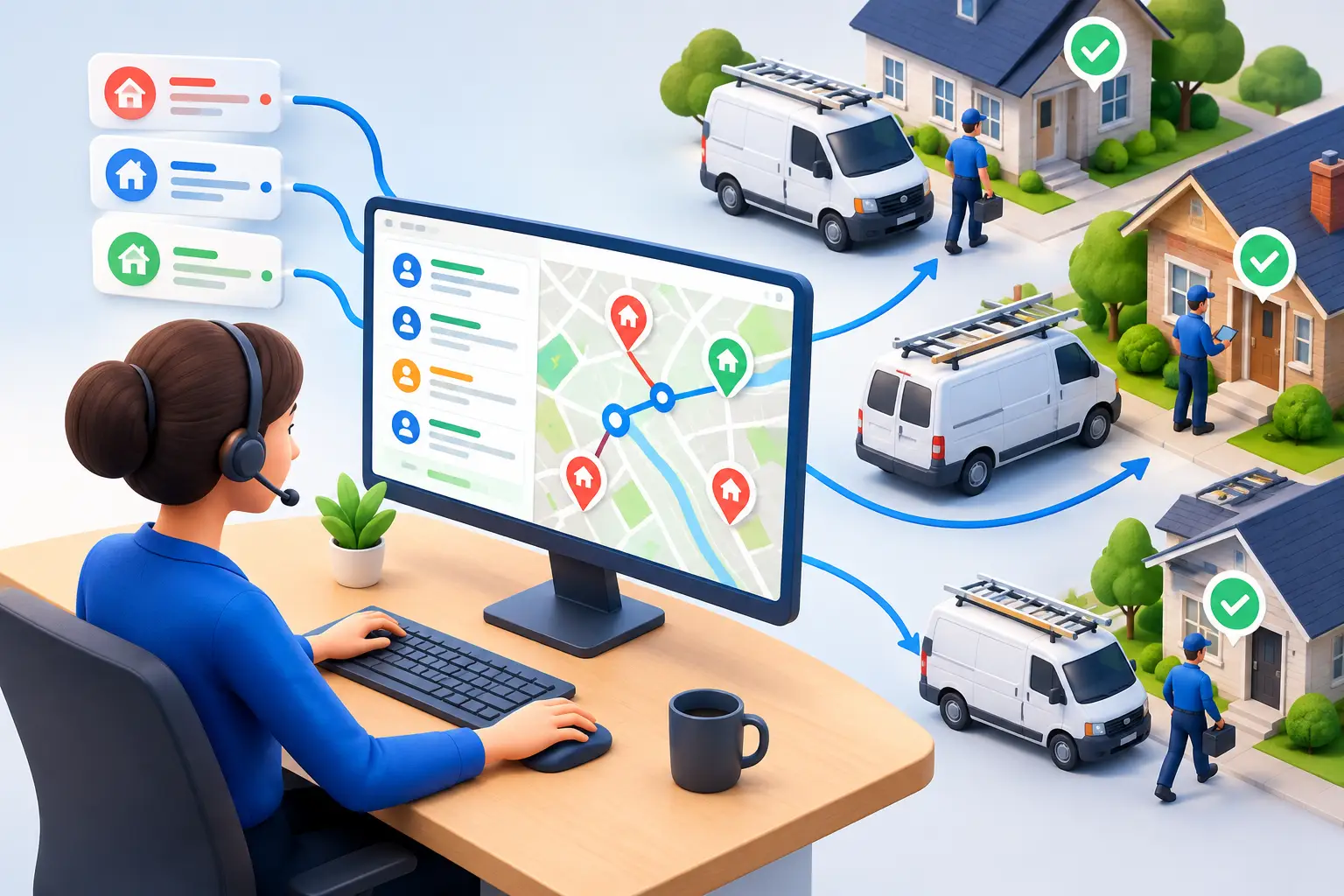
A customer with a burst pipe is not going to wait until your office reopens. They will call the next plumber if the phone rings out, the voicemail is full or nobody can confirm a time. That is the commercial reality of home service dispatch: it is not just about moving jobs around a calendar. It is about turning urgent enquiries into booked work while keeping your team on the tools.
For plumbing, electrical, HVAC, pest control, cleaning, roofing and similar businesses, dispatch sits in the middle of revenue, customer experience and labour utilisation. Get it right and customers know when help is coming, tradies arrive prepared and the office is not chasing information across texts, notebooks and missed-call lists. Get it wrong and a busy day turns into lost jobs, frustrated staff and costly gaps in the run sheet.
What home service dispatch needs to do
Dispatch begins the moment a call, web enquiry or repeat customer request comes in. The job is to capture the right details, assess urgency, match the work to the right person and lock in a realistic appointment. It continues until the customer has been updated, the tradie has what they need and the next action is clear.
A strong dispatch process answers a few practical questions fast. What is the problem? Where is the property? Is there a safety issue or an active emergency? Is the customer new or existing? Which technician has the right skills, stock and availability? And can the customer be given a credible arrival window?
The goal is not to promise a technician will be there in 20 minutes when the closest qualified tradie is an hour away. Overpromising creates a second customer-service problem. Good dispatch protects the relationship by setting clear expectations, then keeping the customer informed if conditions change.
The real cost of a missed dispatch call
A missed call rarely stays a missed call. It can become a lost job, a missed opportunity for future maintenance work and a customer who tells their neighbour that nobody answered. For emergency and high-intent work, speed matters more than a polished sales script.
The pressure is greatest outside standard office hours. A homeowner might call at 7 pm after finding a leaking hot-water system, or at 6 am when the power trips before school and work. If your business relies on someone noticing the voicemail, returning the call and finding an open slot, the lead may already be gone.
This is where always-on call handling earns its place. An AI voice agent can answer immediately, ask the approved questions, identify urgent jobs, capture photos or details where your workflow allows it, and book or route the enquiry. Your staff still handle the complex diagnosis, the sensitive customer and the onsite work. The system takes the first-response load off them so leads do not go cold.
Build a dispatch workflow around the job, not the phone
Many home service businesses add people as call volume grows. That can work, but only if the workflow behind the phone is clear. Otherwise, the same information is gathered twice, jobs are entered late, and dispatchers spend the day switching between the phone, calendar, CRM and field-service platform.
Start by mapping the journey from first contact to completed job. Look for the points where customers wait, staff rekey data or a job falls into a gap between sales and operations.
Capture details once
Your intake questions should reflect the jobs you actually do. A blocked drain enquiry needs different information from a split-system air-conditioning service. Keep the first conversation focused on booking-critical details: contact information, address, service required, urgency, property access and anything the technician needs to know before arriving.
Avoid turning initial intake into a lengthy interrogation. If a photo, model number or detailed scope is needed for quoting, capture enough to move the lead into the next step, then follow up with a targeted request. The customer wants confidence that help is on the way, not a 12-minute form over the phone.
Triage urgency with clear rules
Not every job should be treated as an emergency, but every dispatcher needs to recognise one. Set agreed rules for issues such as exposed electrical hazards, active flooding, gas smells, no heating for vulnerable residents, or a security concern after a break-in.
Those rules should dictate the next action. It may be an immediate call to an on-call technician, a same-day priority booking, or clear safety advice while the customer waits. Automating this stage only works when the escalation path is specific. “Urgent” is too vague. Define who gets contacted, how quickly and what happens if they do not respond.
Match the right tradie to the right work
The nearest person is not always the right person. Skills, licences, parts on hand, job duration, current location and promised appointment windows all matter. Sending an unqualified technician may save a few minutes now and create a return visit later.
For smaller teams, this may be as simple as visibility over who is available and what each person is qualified to do. Larger operations need better rules around service zones, job types and capacity. Either way, dispatch should prevent the common problem of stacking a technician’s diary so tightly that one delayed job knocks over the entire day.
Confirm the booking and keep customers updated
A booking is not complete when it is added to a calendar. The customer needs a confirmation with the date, time window and a clear way to reschedule. On the day, a reminder and an arrival update reduce no-shows, avoid wasted travel and cut down on “where is the tradie?” calls.
This is a useful place for automation because the messages are repetitive but important. A system can send confirmations, reminders and updates consistently, while the office steps in if the schedule changes materially or the customer needs reassurance.
Where automation helps, and where people still matter
The best home service dispatch setup does not try to make software pretend it is a senior technician or an experienced customer-service manager. It gives routine, time-sensitive work to automation and preserves human attention for decisions that benefit from judgement.
AI can answer overflow and after-hours calls, qualify the lead, collect job details, schedule appointments within your rules, manage simple reschedules, send reminders and create or update records in the CRM you already use. It can also route a high-value renovation lead, a difficult complaint or a complex fault to the right staff member with the context already captured.
People should remain central when a customer is distressed, the scope is unclear, a price needs careful explanation or an onsite assessment is required before commitment. That is not a limitation. It is the point. When the routine load is handled reliably, your team has more time to listen, advise and close the work that needs them.
Sparkssurge approaches this as an operational extension of the team: cover the calls, qualify the enquiry, book the job and keep the follow-up moving, without forcing staff to abandon the tools they already rely on.
Measure dispatch by revenue and reliability
A packed calendar can hide a poor dispatch operation. Measure the outcomes that show whether enquiries are being converted and delivered well.
Track call answer rate, especially after hours and during peak periods. Watch how long it takes to respond to web leads and voicemails. Compare booked jobs against total enquiries, then separate emergency, standard service and quote requests so you can see where leads are dropping away.
Operational measures matter too. Monitor no-shows, late arrivals, repeat visits caused by poor job information, unproductive travel and how often technicians need to ring the office for missing details. If staff are constantly chasing customers for addresses, photos or access instructions, the intake process is the first place to improve.
Do not judge automation only by how many calls it handles. Judge it by whether it creates accurate bookings, protects staff time and delivers leads to people ready to act. A fast answer that produces bad information simply moves the problem downstream.
A practical way to improve dispatch this month
Start with your missed-call report. Review a week of calls that were unanswered, returned late or never converted. You will usually find patterns: calls arriving after hours, the same questions being asked repeatedly, quote requests sitting too long, or office staff trying to answer phones while managing a packed schedule.
Then choose one workflow to tighten. It might be after-hours emergency intake, same-day booking, reminder messages or quote follow-up. Give it clear rules, connect it to the calendar and CRM, and test it with real call scenarios before relying on it at full volume.
The aim is not to build a complicated dispatch machine. It is to make sure the next customer who needs help gets a timely answer, a realistic booking and a reason to choose your business before they call someone else.
See it on your own calls
Book a short demo and we will show you how Sparkssurge answers, qualifies and books on your workflow.
Book a demo