AI Receptionist vs Answering Service: Key Differences
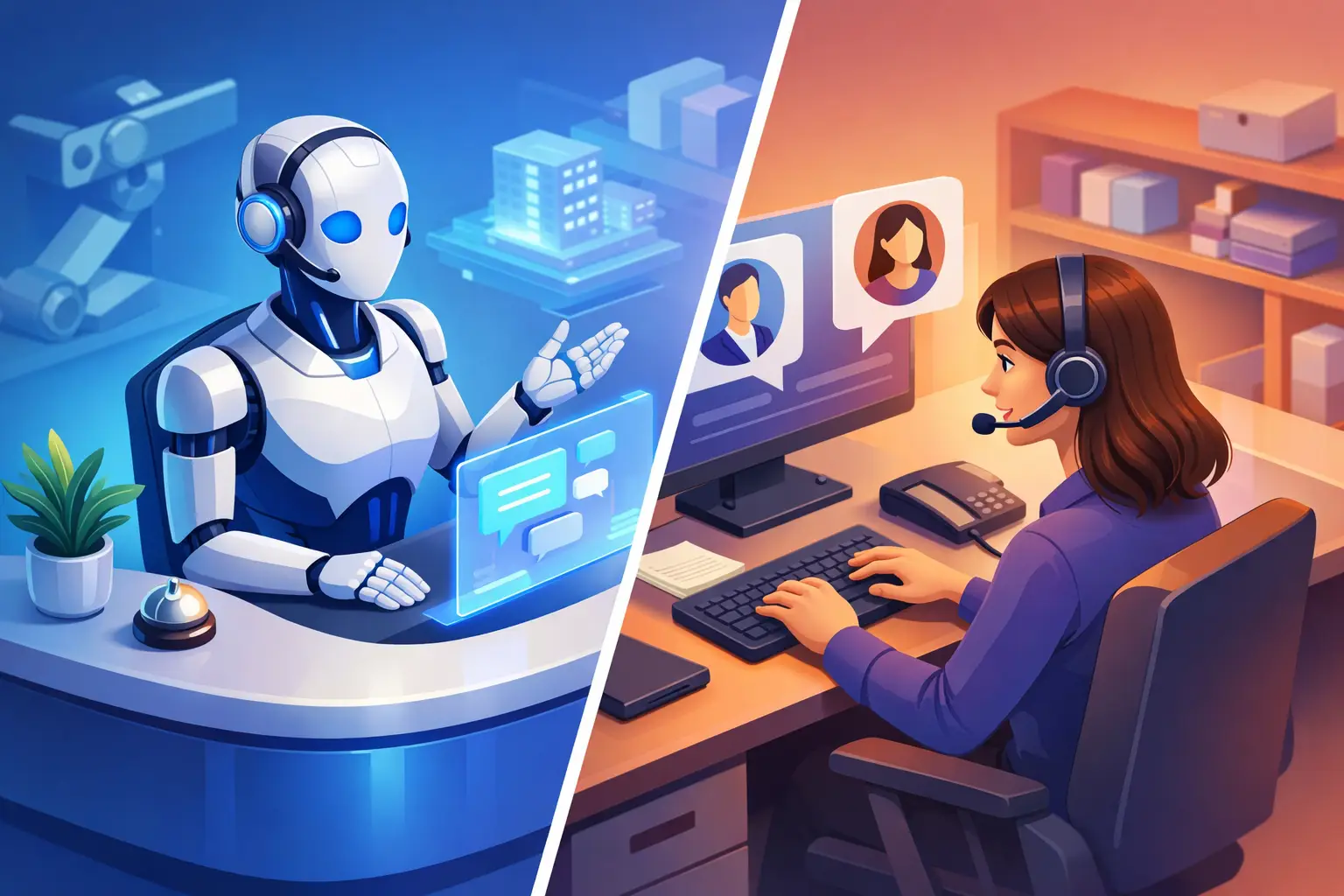
A missed call at 7:15 pm can be a $2,000 job that goes to the next tradie who answers. That is why the AI receptionist vs answering service decision is not really about who picks up the phone. It is about what happens to the enquiry once somebody says hello.
For Australian service businesses, both options can stop calls landing in voicemail. But they work very differently after that point. One mainly provides a human safety net for inbound calls. The other can become part of the workflow that qualifies, books, confirms, routes and follows up leads.
The right choice depends on your call volume, the complexity of your enquiries and where revenue is currently slipping through the cracks.
What an answering service actually does
An answering service uses people to answer calls on your behalf, usually outside normal business hours or when your team is busy. The operator follows a script, takes a message, handles basic FAQs and may transfer urgent calls according to your instructions.
For a plumbing business, that could mean identifying a burst pipe as urgent and putting the caller through to the on-call technician. For a clinic, it may mean taking a patient’s details and passing a booking request to reception for the next morning. It is a straightforward way to give callers a real person rather than a recorded message.
The strength of an answering service is human judgement. A well-trained operator can hear when someone is distressed, frustrated or uncertain, and respond with empathy. That matters in sensitive settings such as healthcare, aged care, legal matters or high-stakes customer complaints.
The limitation is that the service often stops at message-taking. Your staff still need to review the notes, return the call, enter information into the CRM, check availability and chase the lead if they do not answer. If Monday morning is already full of jobs, messages can sit too long. The caller who needed a same-day quote may have moved on before anyone gets back to them.
There can also be a cost trade-off. Human answering services commonly charge per call, per minute or for after-hours coverage. Costs can climb when enquiries spike, especially if operators need lengthy scripts or frequent updates.
What an AI receptionist does differently
An AI receptionist is a voice agent configured around your business rules, services, booking process and call flows. It answers calls 24/7, but its value is in completing useful next steps while the customer is still on the line.
Rather than simply recording, “Customer wants a solar quote”, it can ask about the property, current energy use, postcode, roof type, timeframe and preferred appointment times. It can then book an eligible consultation into the right calendar, capture the details in the CRM and send a confirmation.
For many businesses, that means the receptionist function shifts from passive call coverage to active lead handling. The agent can answer common questions, manage reschedules, send reminders, route complex calls to staff and flag high-value opportunities for priority follow-up.
A properly configured AI receptionist should not pretend it can solve everything. It needs clear handover paths. A caller with a complicated finance question, an upset existing customer or an unusual job request should reach the right person quickly. AI works best when it handles repetitive, rules-based conversations and gives your team better context when human expertise is needed.
AI receptionist vs answering service: the practical difference
The simplest distinction is this: an answering service captures calls; an AI receptionist can move calls through an operational process.
That does not mean an AI receptionist is automatically better in every situation. If your calls are rare, highly emotional or require deep judgement from the first sentence, a human service may be the better fit. A small professional practice that gets only a few after-hours calls a week may simply need someone calm and capable to take accurate messages.
But if your business regularly fields predictable enquiries, books appointments or loses leads due to slow callbacks, automation has more room to create value. Think of an electrical contractor receiving quote requests during site visits, a dental practice handling cancellation calls at night, or a real estate team trying to respond to weekend appraisal enquiries. In each case, speed and accurate capture matter as much as a friendly greeting.
Booking is where the gap becomes obvious
An answering service can ask for a preferred time. Usually, someone on your team still has to check the calendar and confirm it later. That adds delay and creates an extra admin task.
An AI receptionist can check approved availability, offer suitable times and place the booking directly into the calendar. It can also send confirmation and reminder messages, reducing no-shows without adding another task to reception.
For appointment-based businesses, this is often the deciding factor. If the caller can book the job, consultation or inspection immediately, there is less chance of the lead going cold.
Qualification protects the team’s time
Not every caller is the right customer. Some are outside your service area, looking for work you do not offer or nowhere near ready to buy. A human answering service can collect basic information, but it is generally not designed to run a structured qualification process on every call.
An AI receptionist can ask the same qualifying questions consistently, every time. It can identify urgency, service type, budget indicators, location and decision-maker status, then route the call or booking according to your rules. Your sales team starts with better information instead of a vague message that says, “Please call John back.”
This is particularly useful for solar, finance, home services and automotive businesses where the next step depends on specific customer details.
Follow-up determines whether the lead converts
Call answering is only the first moment. The lead still needs a quote, a reminder, a callback or another nudge to keep moving.
A traditional answering service usually hands that responsibility back to your staff. An AI-led workflow can create a task, update lead status and trigger follow-up activity in the CRM you already use. When paired with sales automation, it can keep chasing the next action until a prospect books, replies or is marked as not proceeding.
That matters because most lead leakage happens quietly. No one deliberately ignores the enquiry. The team gets busy, the quote takes another day and the follow-up is forgotten after a full week on the tools or in appointments.
Questions to ask before choosing
Start with the calls you are missing, not the technology you think you need. Review a fortnight of missed calls, voicemail messages and delayed callbacks. Look for patterns: after-hours enquiries, repeat booking questions, quote requests, cancellations or calls that staff cannot answer while serving customers.
Then ask whether the caller needs a person immediately, or needs an outcome immediately. Those are not always the same thing. A caller asking to move tomorrow’s physiotherapy appointment needs a confirmed new time. A homeowner with water pouring through the ceiling needs fast escalation. A person making a serious complaint may need a trained human from the outset.
You should also check integration early. If call notes live in one system, appointments in another and lead follow-up in a spreadsheet, any solution will create more work unless it fits the tools your team already uses. The best setup records the conversation, updates the contact, creates the booking and tells staff exactly what requires attention.
Finally, decide what a successful call looks like for each call type. It could be a booked inspection, an urgent transfer, a qualified lead, a completed reschedule or a clearly logged message. This gives both an answering provider and an AI provider the rules needed to perform properly.
A practical model for growing businesses
Many businesses do not need to make this an all-or-nothing choice. Human staff should remain central for advice, exceptions, relationship-critical conversations and work that needs experience on the spot. The goal is to remove the phone and admin work that prevents them from doing that well.
A sensible starting point is to use an AI receptionist for overflow and after-hours calls, basic enquiries, bookings and reschedules. Once those workflows are working, expand into lead qualification, quote-ready information and persistent follow-up. Sparkssurge is built around this approach: cover every call first, then automate the sales steps that are slowing the team down.
The business that wins the call is not always the biggest one. It is often the one that responds first, gives the customer a clear next step and follows through without making them chase. Choose the service that helps your team do exactly that.
See it on your own calls
Book a short demo and we will show you how Sparkssurge answers, qualifies and books on your workflow.
Book a demo