AI Phone Calls: Stop Leads Going Cold
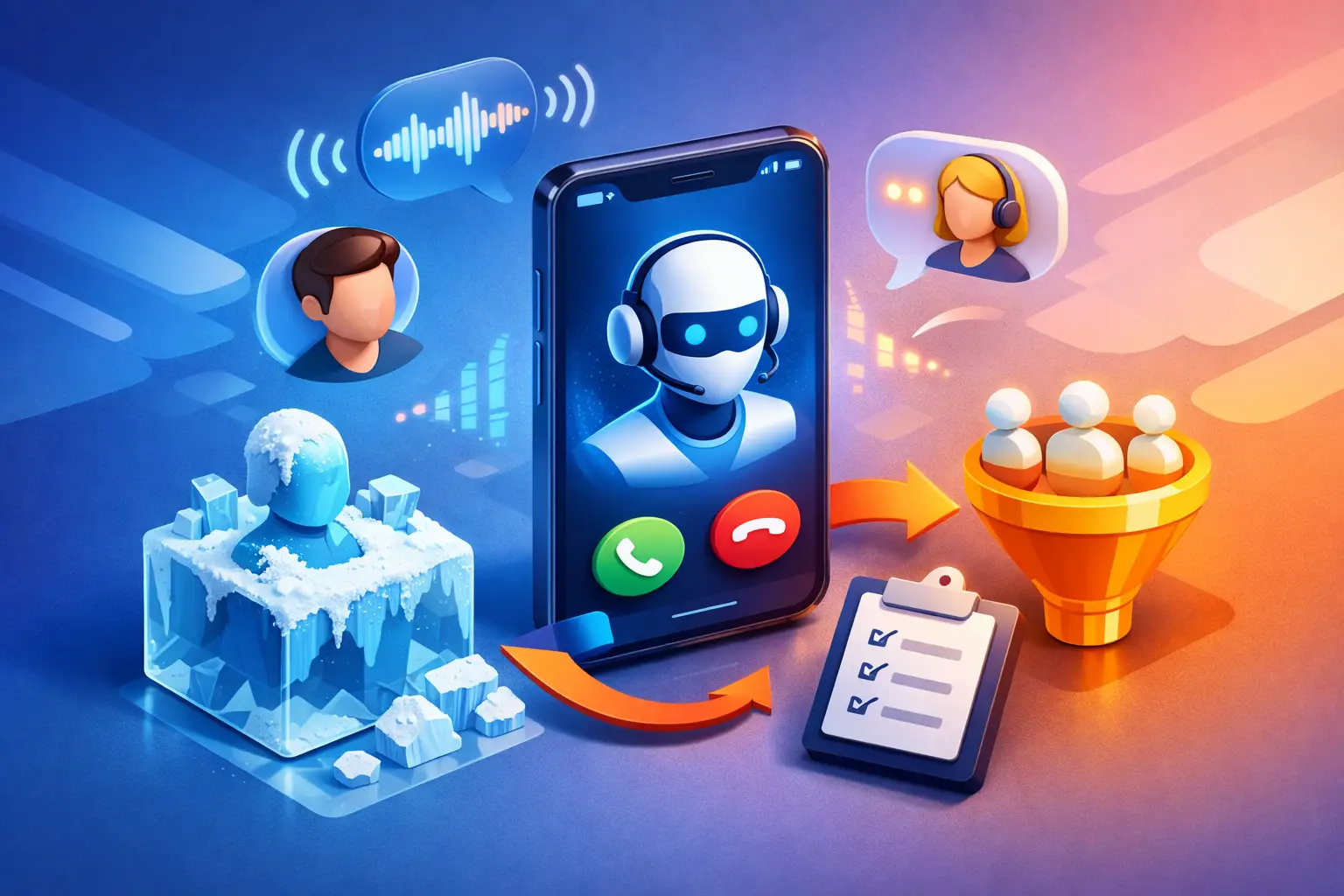
A homeowner rings a plumbing business at 7:18 pm with water coming through the ceiling. A prospect calls a solar company while comparing three quotes. A patient tries to move tomorrow’s appointment after the practice has closed. In each case, a voicemail is not a neutral outcome. It is a lead at risk of going elsewhere.
AI phone calls give service businesses a practical way to answer, qualify and progress those conversations when the team is on another job, serving a customer or simply finished for the day. Done well, they do not replace the person customers rely on for advice or complex decisions. They make sure that person receives a warmer, better-organised conversation to take over.
What AI phone calls actually do
An AI voice agent answers or places calls using a natural spoken conversation. It follows your business rules, asks the right questions, captures details and takes an approved next step. That might be booking a site visit, checking appointment availability, rescheduling a customer, sending a reminder or routing an urgent job to the right staff member.
For an inbound caller, the experience should feel useful, not like being trapped in a phone menu. A good agent recognises why the customer is calling, asks only for information needed to move the job forward, and confirms what happens next.
For example, a tradie’s voice agent can establish the suburb, job type, urgency, preferred time and contact details. It can flag a burst pipe as urgent, offer an available booking slot for a non-urgent repair, and place everything straight into the CRM or job calendar. The office team starts the next morning with booked work and clear notes, rather than a string of voicemails to chase.
Outbound calls work differently but serve the same commercial goal. The agent can follow up an enquiry within minutes, check whether a quote was received, confirm the details needed to prepare a quote, or remind a prospect of an upcoming consultation. Consistent follow-up matters because leads rarely disappear after one missed call. They go cold when nobody comes back to them quickly enough.
Where AI phone calls make the biggest difference
The strongest use case is not every conversation. It is the repeatable part of the phone workflow where speed and consistency matter most.
Appointment-based businesses benefit immediately. Dental practices, clinics, fitness studios and automotive workshops can answer booking enquiries, handle straightforward reschedules and send reminders without making reception choose between the ringing phone and the customer standing at the counter.
For home services, phone coverage protects revenue outside normal office hours. A customer searching for an electrician, pest controller or air-conditioning technician usually wants an answer now. Capturing the job details and booking a callback is far more valuable than hoping they leave a clear voicemail.
Sales-led businesses can use voice AI to qualify before a rep invests time. A solar enquiry may need information about the property, current energy use, location, ownership and timeline. A mortgage enquiry may need a broad view of borrowing plans and preferred contact times. The aim is not to force a full sale through automation. It is to give the sales team enough context to have a useful next conversation.
This is particularly valuable during peaks. When campaign leads land at once, the team can either respond in order as time allows or use AI to contact each lead, identify genuine intent and keep everyone moving. The difference is felt in conversion rates, but also in staff workload. Your best people spend less time copying details between systems and more time advising customers, quoting accurately and closing work.
The handover is where the value sits
A phone agent is only as helpful as the next step it creates. Capturing a name and mobile number is not enough if the enquiry then sits in an inbox. The workflow needs an owner, a status and a clear action.
That is why integration matters. AI phone calls should work in the CRM, calendar, booking tool and phone workflow you already use. If an agent books a consultation, the team should see the booking, caller notes and lead status without re-entering information. If it identifies an urgent issue, the right person should be alerted straight away.
A practical setup usually separates conversations into three paths. Straightforward enquiries are resolved or booked by the agent. High-value leads are qualified and handed to a sales rep with context. Complex, sensitive or unusual calls move to a human quickly.
Consider a real estate agency taking a Saturday enquiry. The agent can capture the address of interest, buyer or renter status, budget range and inspection availability. If the prospect wants detailed advice on a contract condition, it transfers the call or schedules the agent to respond. That balance protects responsiveness without pretending every situation should be automated.
How to set up an AI calling workflow that helps sales
Start with the calls that are already costing you money or time. Review missed calls, voicemail messages, unworked web leads and follow-up lists from the past month. Look for the same questions, delays and manual handovers appearing again and again.
Then define what a successful call means. For a clinic, it may be a confirmed appointment with the correct service type. For a roofing company, it may be a qualified inspection request with photos and property details ready for quoting. For a sales team, it may be a booked meeting with a prospect who meets the basic criteria.
The script should reflect how your team actually speaks. Give the agent clear rules on service areas, operating hours, pricing boundaries, urgent-call escalation and what it must never promise. Customers will forgive an AI agent for saying it needs to arrange a callback. They will not forgive it for promising a same-day job your team cannot deliver.
Keep early conversations focused. Ask for the information that changes the next action, not every field in the CRM. A caller with a blocked drain does not want to complete a long questionnaire before finding out whether someone can help. Gather the essentials, confirm the outcome and let a human collect the finer detail where needed.
Finally, review real call outcomes weekly. Are bookings showing up correctly? Are sales reps receiving enough information? Which questions cause callers to ask for a person? The best phone agents improve through operational feedback, not by being left alone after launch.
The trade-offs to get right
AI is not the best answer for every call. Complaint resolution, vulnerable customers, complex financial discussions, detailed clinical advice and emotionally charged conversations usually need a person early. Your agent should make that handover easy rather than trying to push through a rigid script.
Trust also matters. Be clear when a caller is speaking with an automated assistant, and explain its purpose in plain language: it can help book, collect details or get the right person involved. Make sure recording, privacy, consent and data handling are set up for your business and the way you contact customers. Outbound calling requires particular care because rules and expectations can vary by audience, channel and campaign.
There is also a brand consideration. A premium service business may choose a more restrained agent that captures details and promises a fast human callback. A high-volume repair business may prioritise instant booking. Neither approach is automatically better. The right choice depends on customer urgency, sales cycle, team capacity and the cost of a missed enquiry.
Turn every answered call into a next step
The point of AI phone calls is not to add another piece of technology to manage. It is to stop the phone from becoming a leak in your sales process. When every enquiry is answered, qualified, booked or routed properly, staff can work from a cleaner pipeline and customers get a faster response.
Sparkssurge approaches voice AI as an extension of the team: one that answers around the clock, chases follow-ups and keeps lead information moving through the systems you already use. Start with the moments your team cannot reliably cover, then expand only where the process is repeatable and the handover is clear.
The most useful question is simple: when your next ideal customer calls and nobody is free, what happens next?
See it on your own calls
Book a short demo and we will show you how Sparkssurge answers, qualifies and books on your workflow.
Book a demo